Selected work

Steki case study

Keep every order moving—in the language each team member understands.

Steki is a restaurant ordering and operations platform connecting customer QR orders, waiter entry, kitchen preparation, cashier handover and shop administration in one live workflow.
ENΕΛDESQ
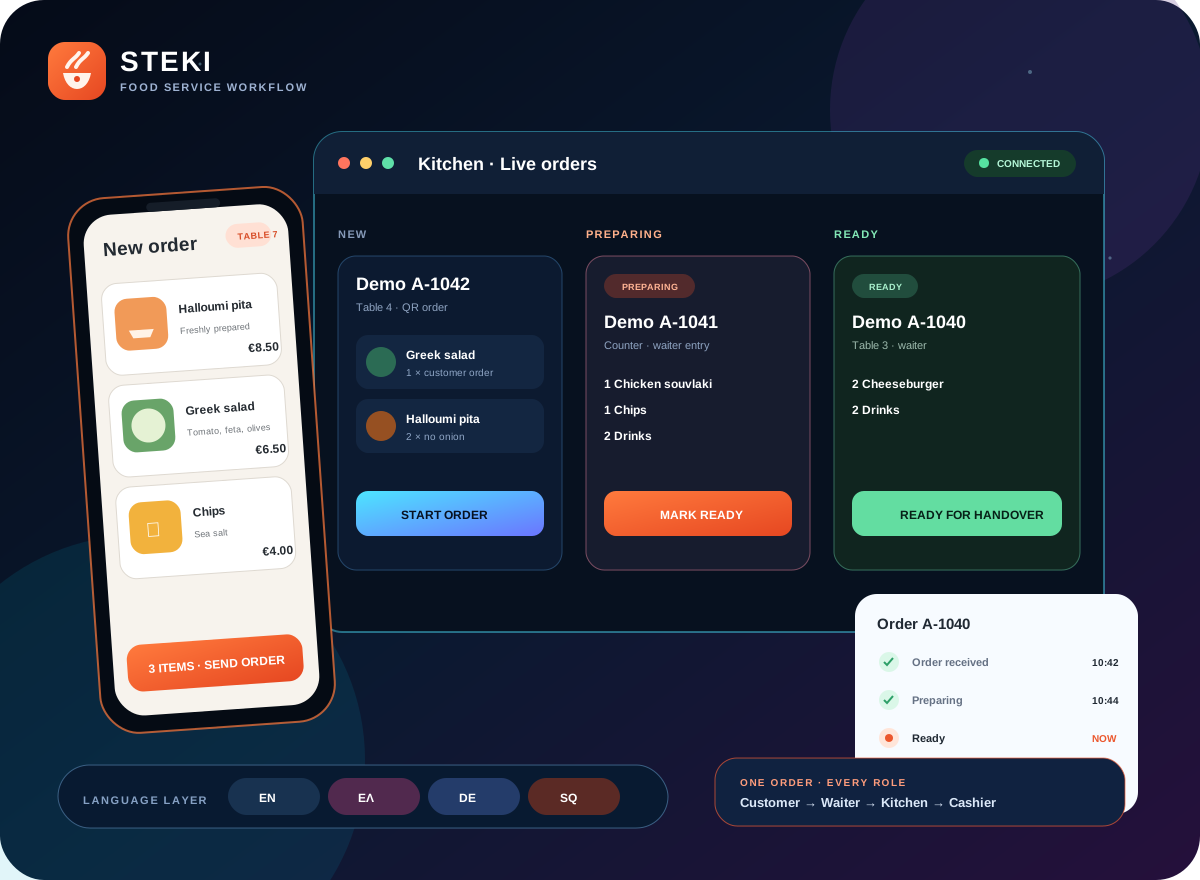
Steki restaurant workflow with waiter phone, kitchen display, customer status and multilingual controls
Project typeRestaurant workflow platform
InterfacesCustomer · Waiter · Kitchen · Cashier
Language resourcesEnglish · Greek · German · Albanian
Operating modelMulti-shop & role based

The challenge

One order passes through many hands.

Restaurant service is not one screen. Customers, waiters, kitchen staff, cashiers and shop administrators each need a different view of the same order, often on different devices and sometimes in different languages.

  • Role handoversKeep order status clear from entry through preparation, ready status and collection.
  • Different devicesGive each role an interface suited to the task rather than one crowded universal screen.
  • Shop identityAllow each location to configure branding, images, currency, timezone and operating options.
  • Language flexibilitySupport a shop default while letting signed-in staff retain an individual preference.
  • Controlled growthStage new customer and ordering capabilities behind testing, approval and safe enablement.

01 · Live workflow

One shared order journey, adapted to every role.

An order can begin through customer QR ordering or waiter entry, move to the kitchen for preparation, progress to ready status and continue to cashier handover or collection.
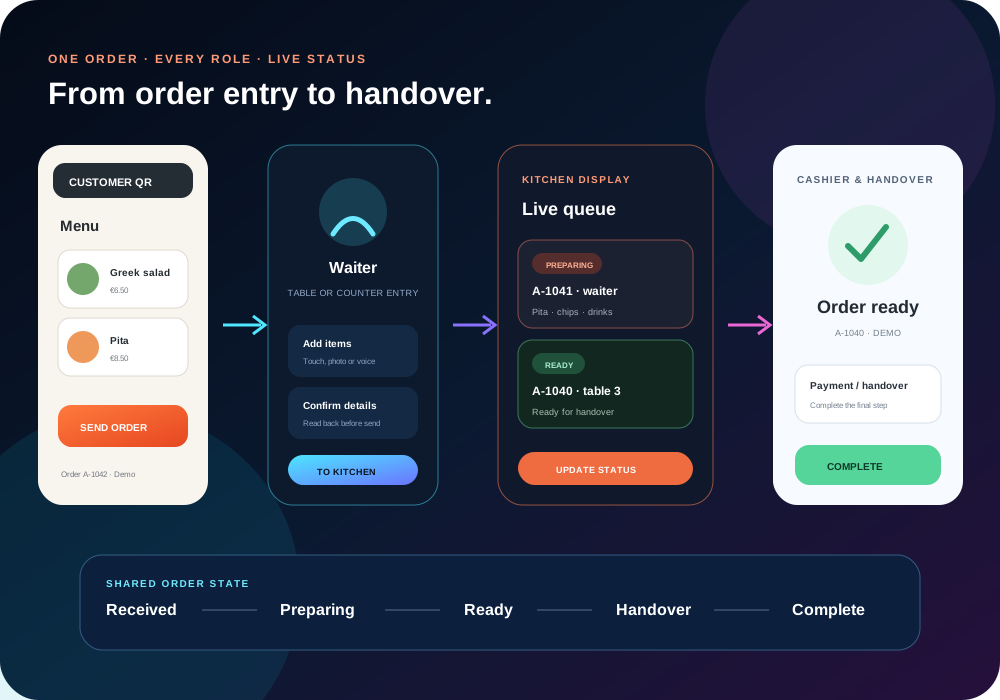
  • Customer QR ordering
  • Waiter ordering on phone or shared device
  • Kitchen display for live preparation
  • Cashier handover after ready status
  • Clear order progress without duplicate re-entry
Demonstration Steki workflow from customer QR and waiter entry through kitchen, ready status and handover

02 · Language capabilities

A shared workflow that does not force every person into one language.

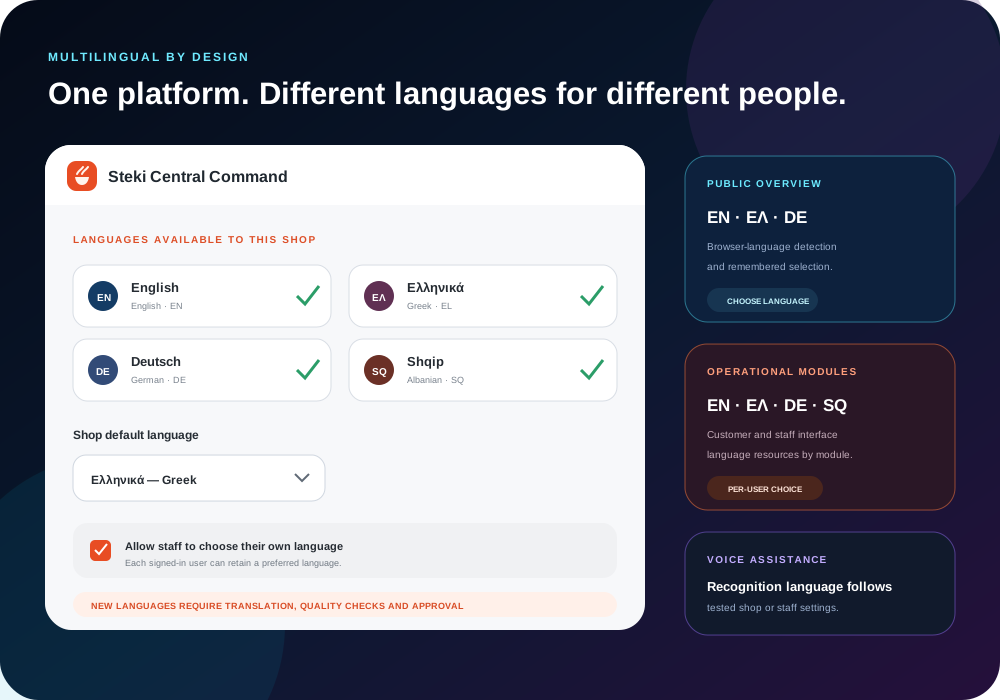
The current public introduction is available in English, Greek and German. Operational and customer language resources extend to English, Greek, German and Albanian.

  • Central Command approves languages for each shop
  • Each shop selects a default interface language
  • Signed-in staff can retain their own preferred language
  • New language requests follow translation and quality review
  • Voice recognition language can be configured separately
Public overview languagesEnglish · Ελληνικά · Deutsch
Operational and customer languagesEnglish · Ελληνικά · Deutsch · Shqip

Voice-assisted features are enabled only where language accuracy has been tested and approved; displaying a written language does not automatically activate voice ordering for it.

Steki language controls showing approved languages, shop default, staff preference and language requests

03 · Per-shop configuration

One platform, shaped to each restaurant.

Steki uses a white-label configuration layer so each shop can present its own identity and choose operational options without changing the shared platform.
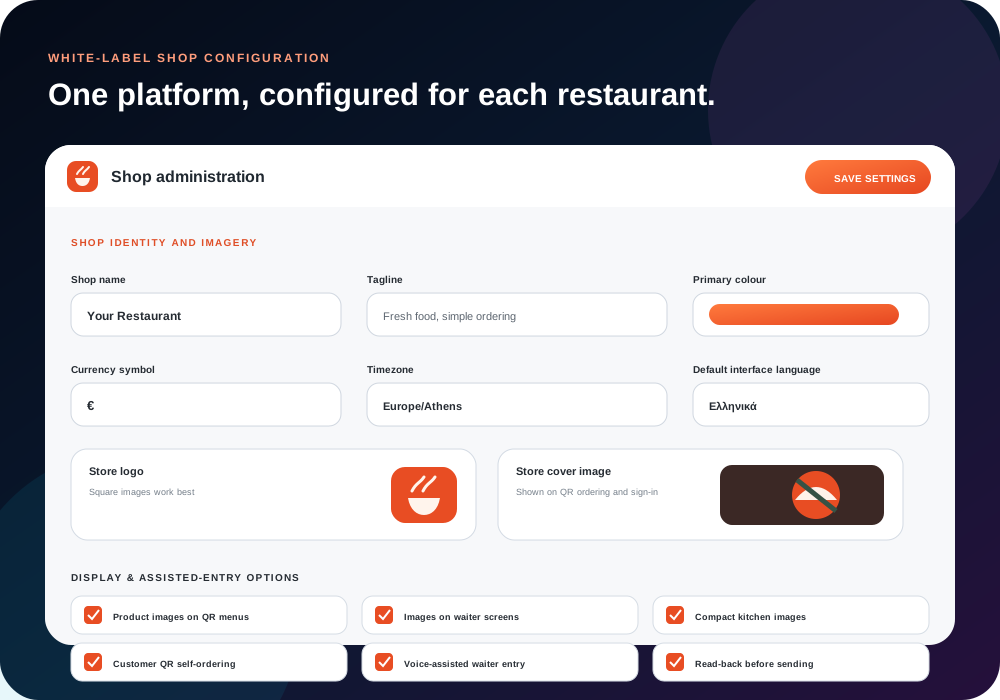
  • Shop name, tagline, logo and cover image
  • Primary colour and product-image settings
  • Currency symbol and timezone
  • Default interface and voice-recognition language
  • Customer QR and waiter-assistance controls
Demonstration Steki white-label shop configuration for branding, language, timezone and ordering options

04 · Customer & assisted ordering

More than one way to place and follow an order.

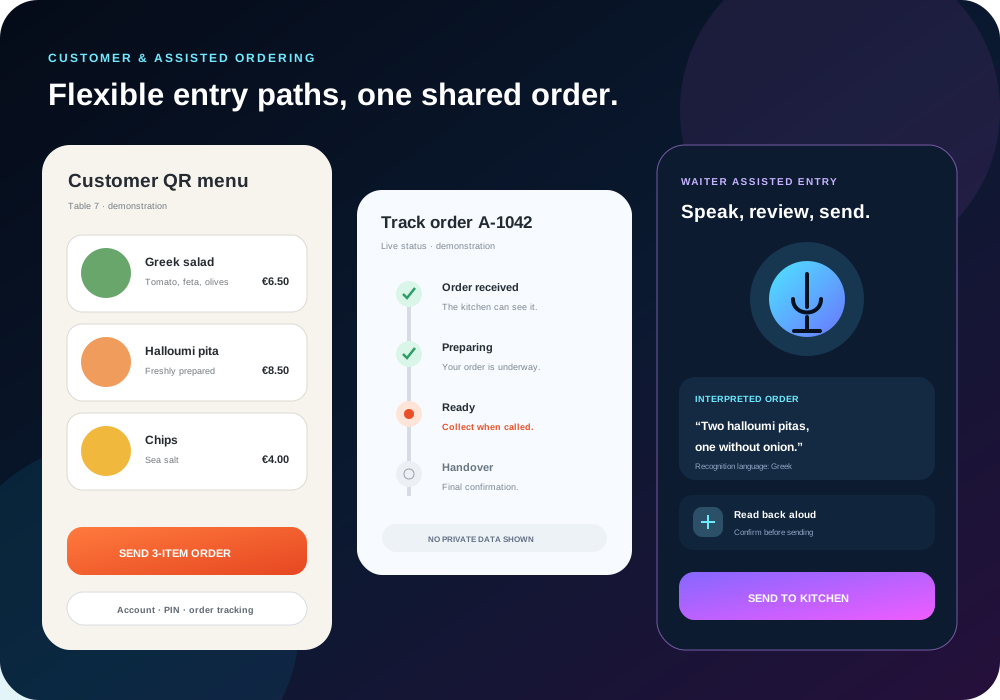
The platform supports visual customer menus and role-specific ordering tools, including QR access, product imagery, order progress and waiter assistance options.

  • Customer QR menus with product images
  • Customer order status and collection progress
  • Waiter voice-assisted order entry
  • Photo-and-voice waiter mode
  • Read-back of interpreted orders before sending

Controlled rollout: newer customer-account, QR-registration, PIN-access and pickup-ordering foundations are staged behind controlled enablement. They are not presented here as generally public features until their safety and operating checks are complete.

Demonstration customer QR menu, order tracker and waiter voice-assisted ordering interfaces

05 · Central Command

Shop-level flexibility with central control of shared rules.

Central Command provides the platform layer for shop access, role boundaries, approved languages and protected configuration across more than one restaurant.

  • Multi-shop administration
  • Role-based access for service teams
  • Language allocation and shop defaults
  • Controlled shop activation and configuration
  • Audit and protected deployment boundaries

The visual is a sanitised recreation with fictional shop and staff information. No private management URL, account or operating record is published.
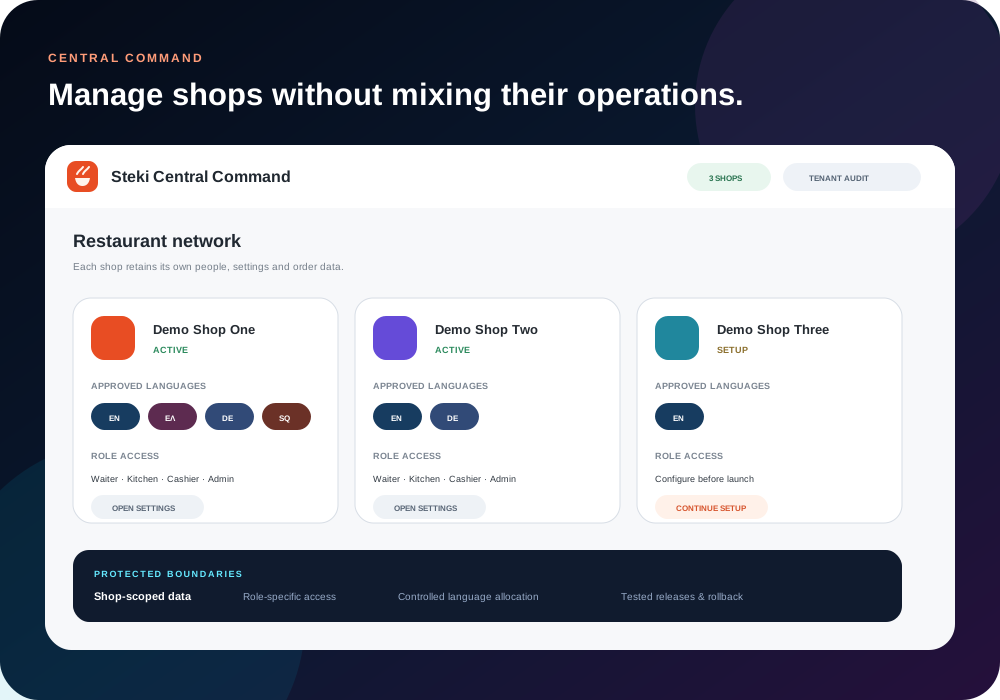
Sanitised demonstration of Steki Central Command for multi-shop access, roles and language allocation

What this project demonstrates

A multilingual product built around live service work.

Steki demonstrates how a web platform can present different, coordinated interfaces without losing the shared order underneath them.

Role-based UX

The right information for each task.

Customers, waiters, kitchens, cashiers and administrators see interfaces shaped around their responsibilities.

Live status

Every handover stays visible.

Received, preparing, ready and handover stages keep the order journey understandable across the team.

Multilingual design

Language at shop and staff level.

Approved languages, defaults and personal preferences make the same platform more practical for diverse teams.

White-label platform

Shared foundation, local identity.

Branding and operating settings allow restaurants to use the common platform without looking identical.

Progressive rollout

New capabilities can remain protected.

Features can be installed, tested and kept disabled until the business is ready to activate them.

Release engineering

Change with verification and recovery.

Manifest checks, atomic deployment, privacy tests and rollback planning support safer development.

Privacy & accuracy

Capabilities shown without publishing restaurant data.

This case study links only to the public Steki overview. Every workflow, order, shop and administration image on ezyNet is a demonstration recreation using fictional information.

No private restaurant URL, customer identity, staff account, live order, transaction or access credential is displayed. Staged features are labelled as staged rather than described as generally available.

Build around the people doing the work

Need one system for customers and several operating roles?

ezyNet can design the public experience, role-specific interfaces and controlled rollout as one connected project.